
Card · Draw · Pattern
Bingo
In bingo, each card contains a selection of numbers and wins by completing the announced pattern before other participants. Ball count, card layout, price, prize pool and sharing rules vary by version. Buying more cards increases coverage and expenditure at the same time; it does not create certainty.
← All guides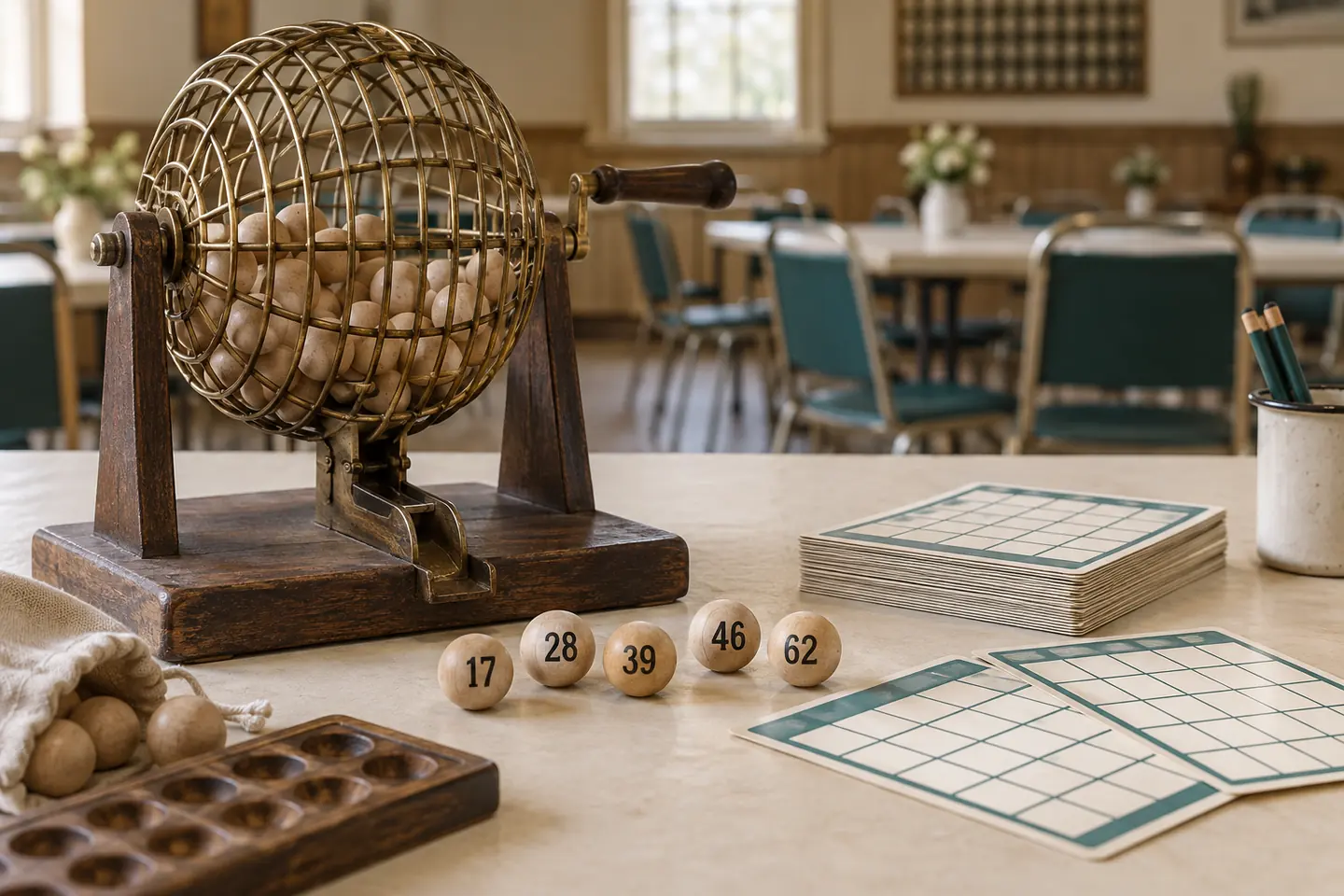
The game at a glance
The game at a glance
Complete sequence of play
Complete sequence of play
- 01
Choose a game
Check the format, card price, sequence of patterns and prize pool. Multiple rounds or automatic card bundles can increase the total cost quickly.
- 02
Receive cards
Each card carries a different combination. Online marking may be automatic; in a hall, the player follows each call without changing the card.
- 03
Follow the draw
Numbers are called without replacement under the applicable equipment or generator. A number already drawn cannot reappear in the same game.
- 04
Validate the pattern
A win requires the active pattern and validation before play resumes. Several winners may divide the prize under the published rules.
Reference table
Comparing common formats
| Feature | 75-ball | 90-ball |
|---|---|---|
| Balls | 1 to 75 | 1 to 90 |
| Typical card | 5 × 5 grid | Three rows of numbers |
| Common wins | Announced patterns | Line, two lines, full house |
| Check | Free space and pattern | Prize order and sharing |
Understand before staking
Understand before staking
75-ball and 90-ball bingo
75-ball bingo commonly uses a five-column card and varied patterns. A 90-ball ticket generally has three rows and may pay one line, two lines or a full house. Local rules still define free spaces, prize order and valid calls.
Probability and card count
A card’s chance depends on the number of valid cards competing and the game structure. Two cards roughly double coverage only where cards and terms are comparable, while definitely doubling the stake. Expenditure should be totalled across the full session.
Sharing, caps and claims
When players complete a pattern on the same call, the prize may be shared. Some games cap a payout or roll a jackpot where a pattern is not completed within a set number of calls. Claim deadlines and proof requirements matter.
Speed and automatic cards
Automatic marking prevents missed calls but enables more cards and simultaneous games. That convenience raises intensity and can hide cumulative cost. A pre-set game count and budget are more reliable than decisions between draws.
Official sources to consult
These references cover the jurisdiction stated in their titles. Applicable rules, variants and payouts remain those of the specific game and jurisdiction.
FAQ
Frequently asked questions
What is the basic principle of Bingo?
In bingo, each card contains a selection of numbers and wins by completing the announced pattern before other participants. Ball count, card layout, price, prize pool and sharing rules vary by version. Buying more cards increases coverage and expenditure at the same time; it does not create certainty.
Which rules should I check before playing Bingo?
Check the format, card price, sequence of patterns and prize pool. Multiple rounds or automatic card bundles can increase the total cost quickly. Also check the exact variant, payment table, stake and session cost before playing.
Does understanding Bingo make it profitable?
No. Understanding the rules helps prevent mistakes but does not remove chance, costs or the house edge.