
Numbers · Matches · Stake
Keno
Keno asks the player to choose several numbers from a larger set before a draw. Payment depends on selection size, number of matches, stake and the version’s paytable. Choosing more numbers creates more possible matching outcomes but changes the thresholds and does not guarantee a better return.
← All guides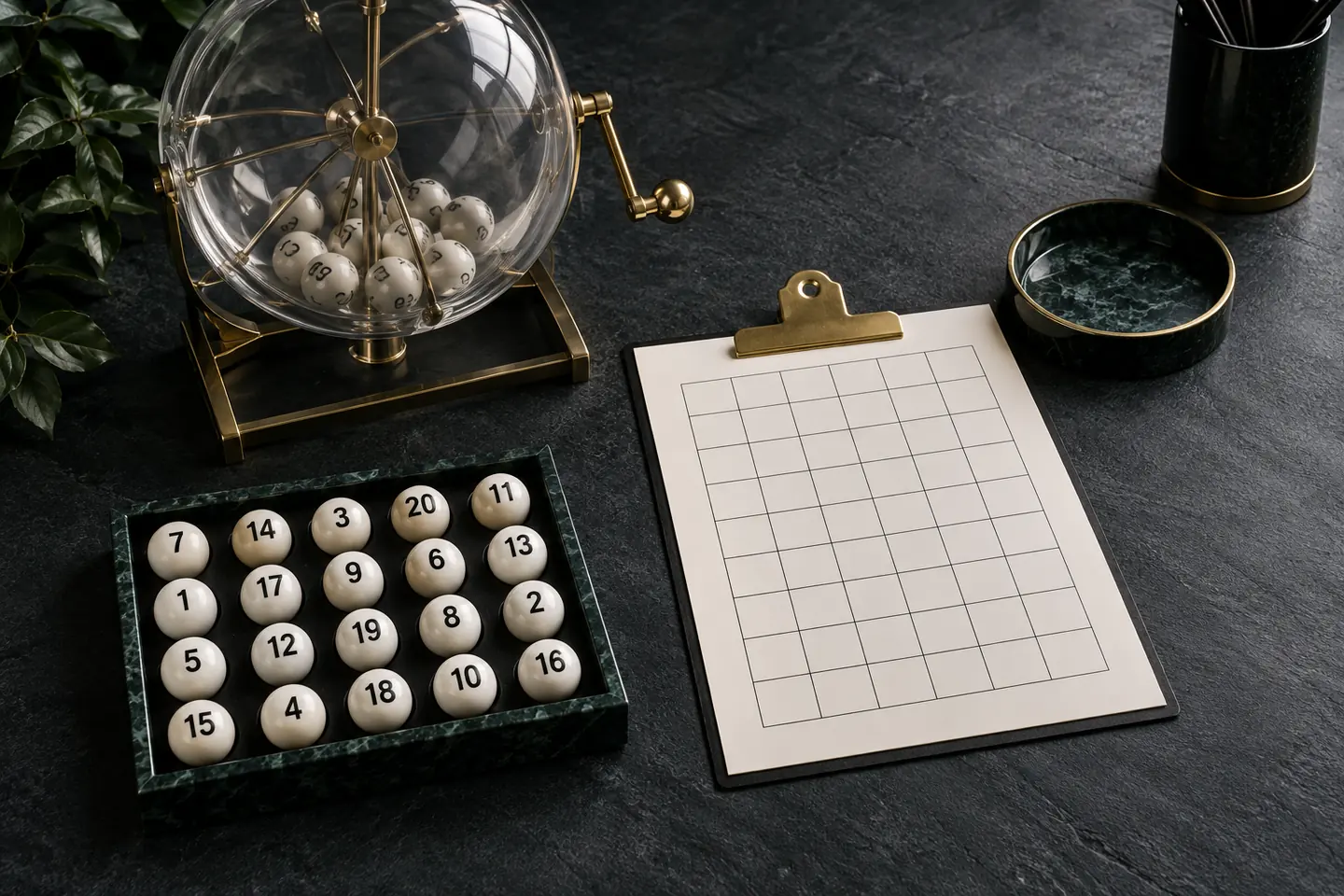
The game at a glance
The game at a glance
Complete sequence of play
Complete sequence of play
- 01
Choose a quantity
Decide how many numbers to select within the permitted range. Each selection size has its own prize tiers.
- 02
Select numbers
Manual picks and random generation have equal probabilities when they contain the same count of distinct choices.
- 03
Set stake and draws
Multipliers, options and repeats alter total cost. The receipt should show the entry, unit amount and draw count.
- 04
Compare the result
Count distinct matches and apply the exact paytable row, subject to caps, validation and claim rules.
Reference table
Reading a keno entry
| Feature | Meaning | Check |
|---|---|---|
| Selection | Numbers chosen | Permitted range |
| Matches | Numbers shared with draw | Exact tier |
| Stake | Price per entry | Included options |
| Repeat | Number of draws | Total cost |
| Payment | Paytable amount | Caps and sharing |
Understand before staking
Understand before staking
Combinations grow rapidly
In a format drawing 20 numbers from 70, every entry sits among a very large number of possible combinations. Adding a number changes both tier probabilities and payments. Entries cannot be compared only by their maximum possible match count.
Hot and cold numbers
Past frequencies describe history, not the next draw. In an independent compliant draw, a long-absent number is not due and a recent number is not favoured. Random selections carry neither an advantage nor a penalty.
Multipliers and options
An option may increase selected payments, add a draw or alter covered tiers, usually for an added price. Compare total cost and changed conditions, not only the advertised maximum.
Frequent draws and cumulative spend
Closely spaced draws turn a small stake into substantial expenditure. Multiply entry price by entries and planned draws. A useful session limit covers both money and number of validations.
Official sources to consult
These references cover the jurisdiction stated in their titles. Applicable rules, variants and payouts remain those of the specific game and jurisdiction.
FAQ
Frequently asked questions
What is the basic principle of Keno?
Keno asks the player to choose several numbers from a larger set before a draw. Payment depends on selection size, number of matches, stake and the version’s paytable. Choosing more numbers creates more possible matching outcomes but changes the thresholds and does not guarantee a better return.
Which rules should I check before playing Keno?
Decide how many numbers to select within the permitted range. Each selection size has its own prize tiers. Also check the exact variant, payment table, stake and session cost before playing.
Does understanding Keno make it profitable?
No. Understanding the rules helps prevent mistakes but does not remove chance, costs or the house edge.